Connected information
Bring together authorized inventory, CRM, activity, reporting, customer policies and connected documents instead of re-entering the same context repeatedly.
MarketSync / IntelligenceOS
Internal IntelligenceOS helps the dealership ask questions, examine evidence, organize work and act on approved tasks. Customer-facing intelligence helps shoppers find relevant vehicles, get reliable dealership answers and reach the right person. They share a connected philosophy—but not unrestricted access to the same data.
Internal dealership intelligence
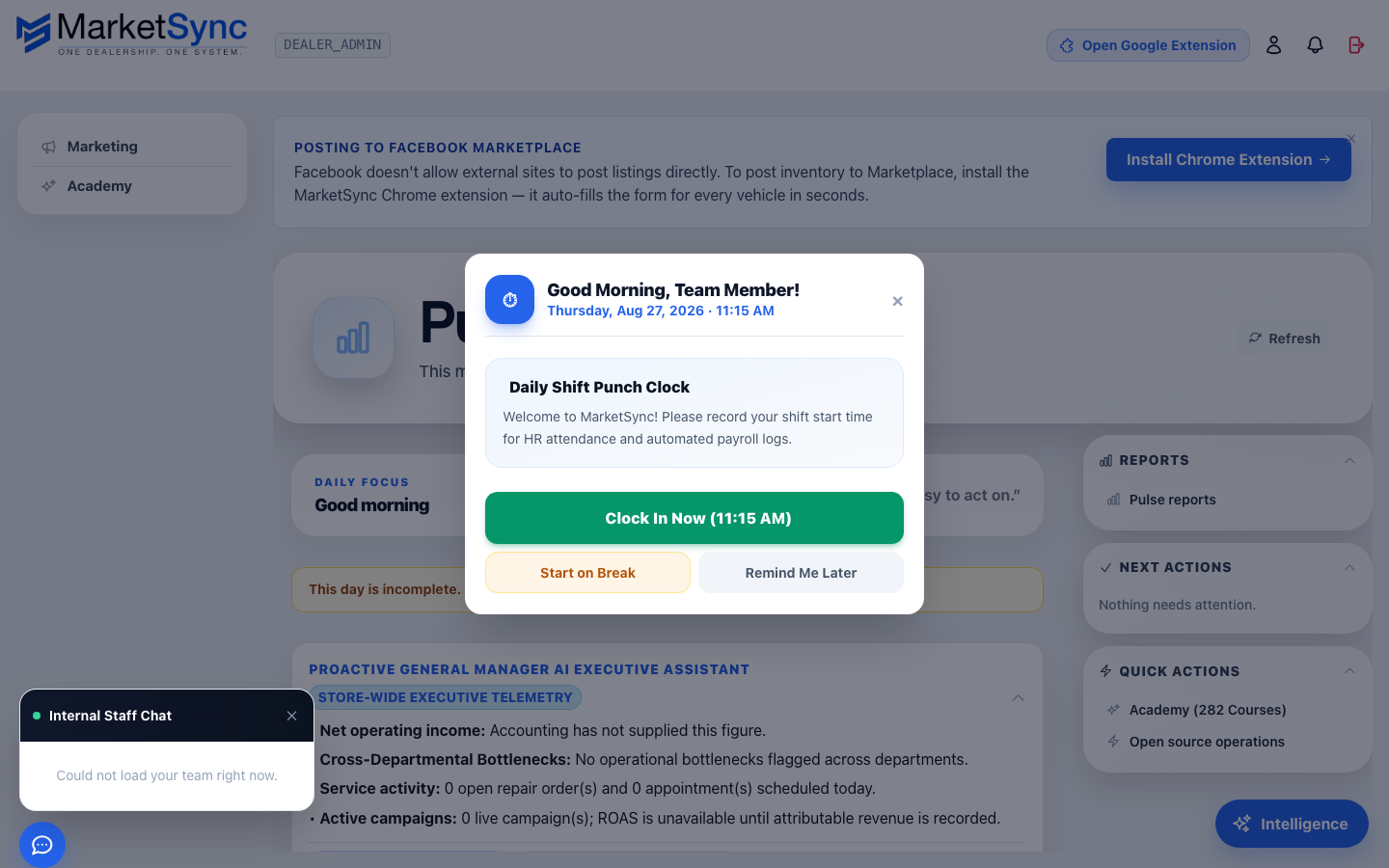
Authorized employees can use connected information to investigate what is happening across their own area of responsibility. Intelligence is useful only when it can distinguish an actual record from an inference, tell you how recent the data is, and make it clear whether the next step is advice or an action requiring confirmation.
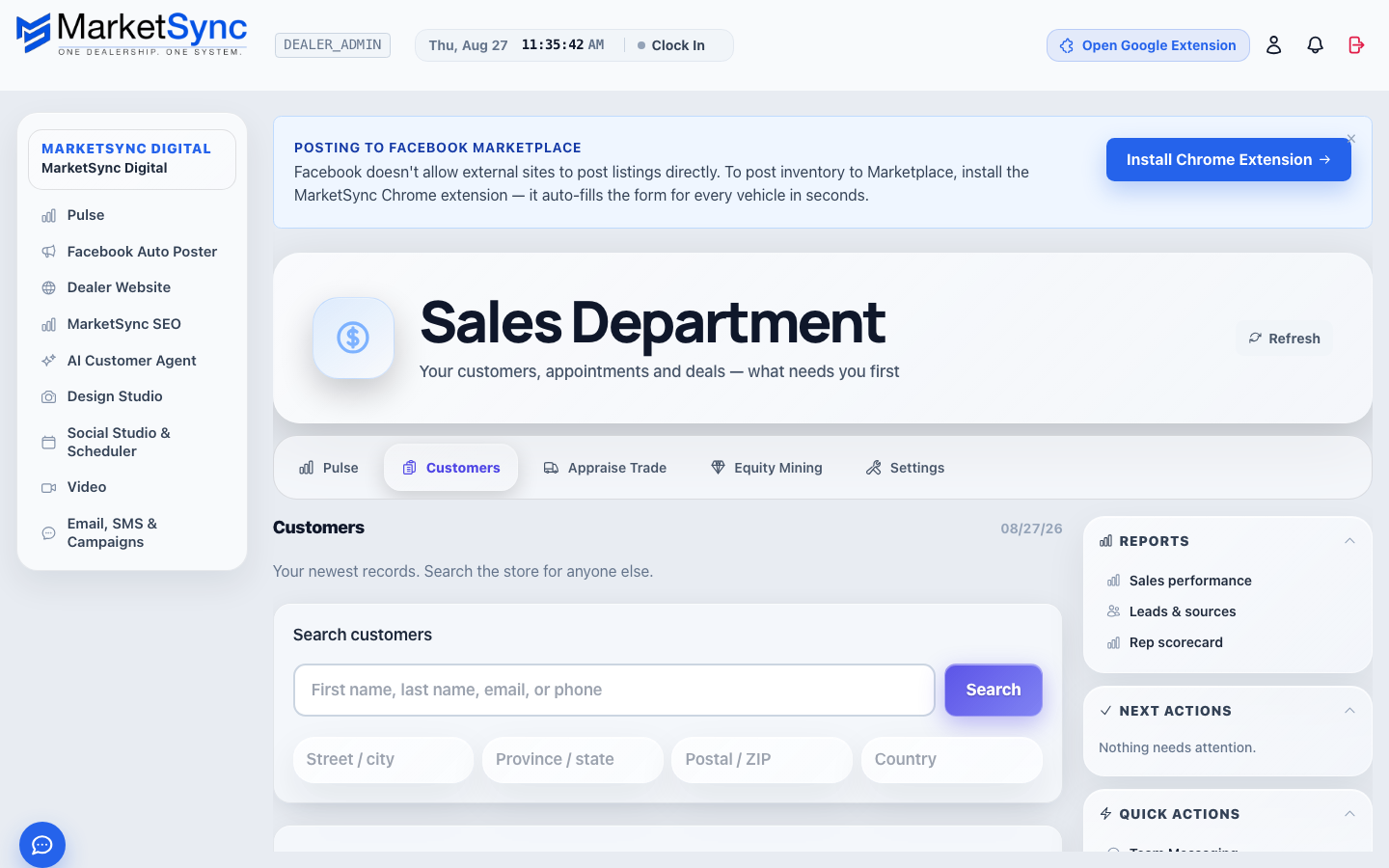
Analyze open opportunities, communication history, customer follow-up gaps, upcoming appointments and workload, with role-appropriate source records.
Explore feature →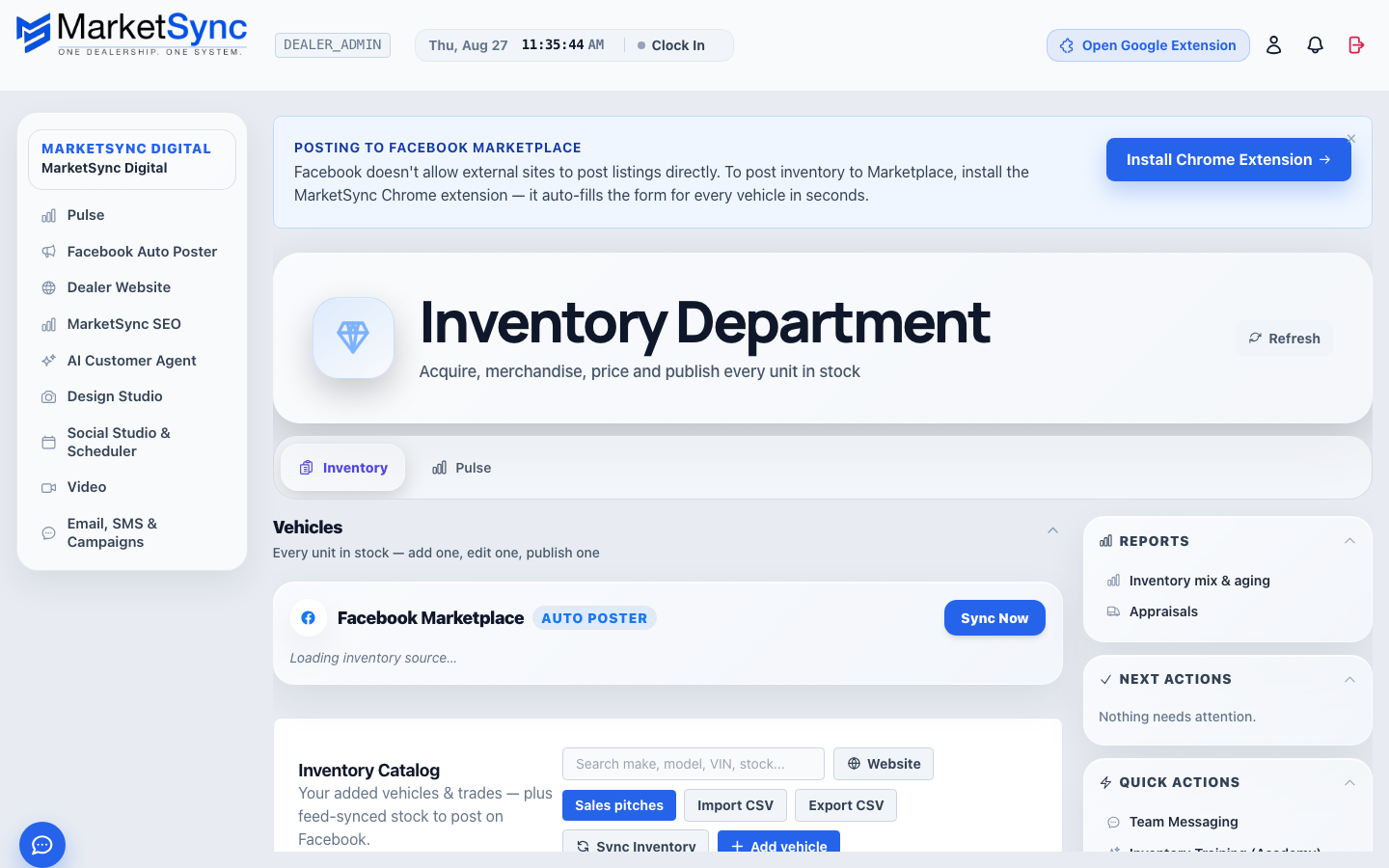
Ask why stock is aging, compare listed vehicles, identify incomplete listings and suggest pricing or merchandising reviews without promising outcomes.
Explore feature →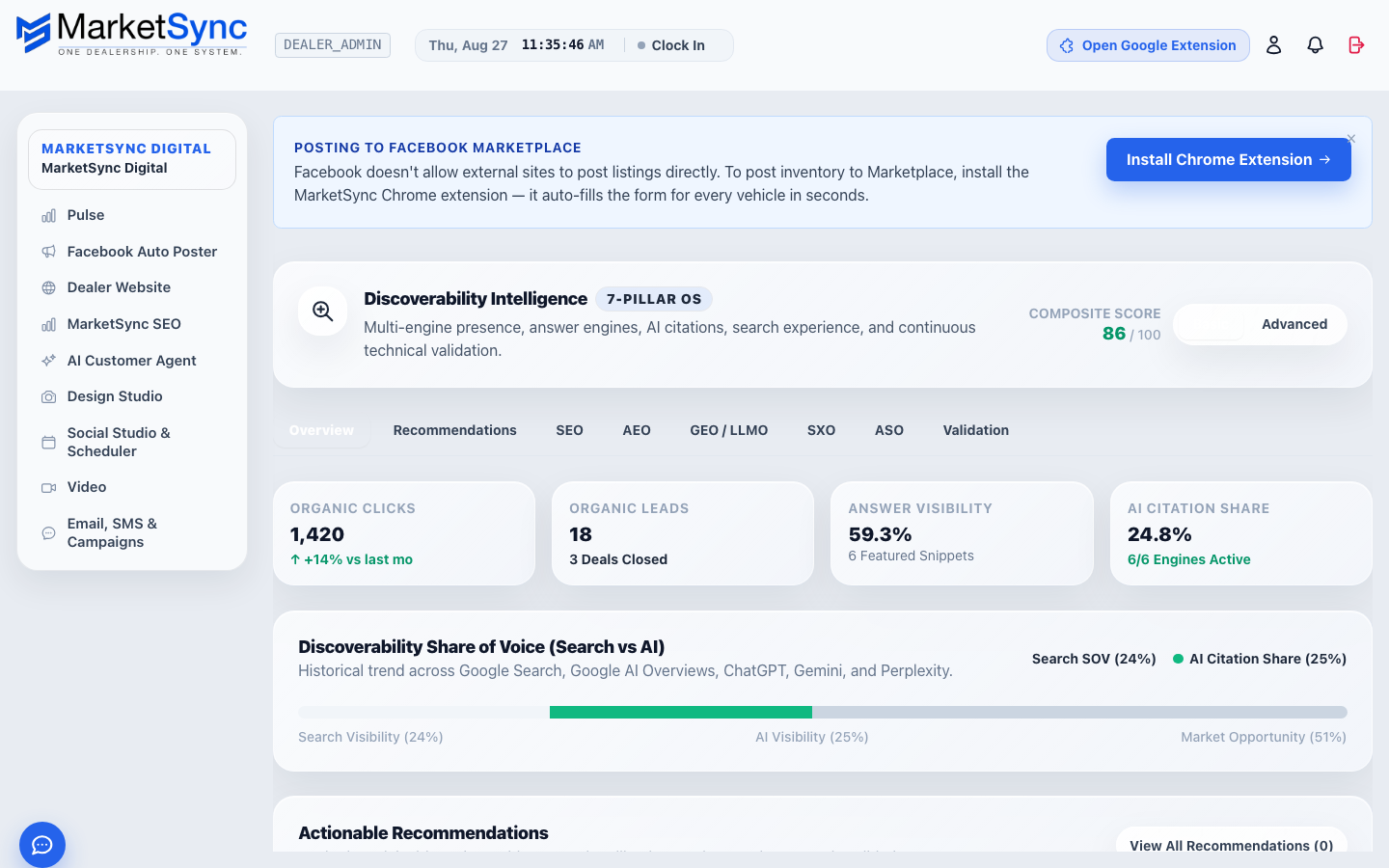
Connect campaign, content, search and website signals where accounts are authorized. Distinguish impressions, inquiries, leads and actual sales attribution.
Explore feature →
Review relevant repair orders, delays, workload and department processes where the store has configured the matching DealerOS data.
Explore feature →
Summarize operational patterns from accounting, F&I, sales and management reports without exposing restricted figures to unauthorized staff.
Explore feature →Draft a follow-up, summarize a lead, propose a task, help build a campaign or identify records to review. High-impact actions should require user approval.
Explore feature →External customer intelligence
The customer agent can use approved, public-facing dealer knowledge and published inventory to answer vehicle questions, compare options, explain common policies, accept requests and connect shoppers to your team. It may hand off questions that require financing, appraisal, appointment or inventory confirmation.
Confidential deals, internal notes, private customer histories and restricted employee or accounting details should never flow into public answers. Context and response rules must be controlled by the dealership.
How IntelligenceOS becomes more useful
Intelligence is not simply a chatbot with a long prompt. Good results depend on relevant records, correct permissions, structured business meaning, retrieval quality, and a way for people to confirm what is useful. The system should improve as the dealership maintains its data and approved knowledge.
Bring together authorized inventory, CRM, activity, reporting, customer policies and connected documents instead of re-entering the same context repeatedly.
Where supported and enabled, use appropriate prior conversations, verified preferences and past approved work to avoid losing context. Not every message becomes permanent memory.
Ask for sources, correct bad assumptions, improve stored documents and confirm changes. That improves future retrieval and configuration; it is not a claim that the underlying model automatically retrains itself.
Nuance matters
“Show overdue follow-ups” and “send a bulk message” are different kinds of requests. IntelligenceOS should explain what it found, the constraints it applied, and which actions are drafts versus actual changes. Customer communication requires consent checks; pricing changes require dealership review; financial or personnel decisions require authorized human judgment.
Distinguish observed records from estimated outcomes. Link to available source data, flag stale information and say when connected data is incomplete.
A salesperson sees the work they are allowed to see. Managers may have broader views. The customer agent receives only approved public-facing knowledge.
Draft first, then verify recipients, details and intent before sending communications or making changes that affect customers or operations.
Approved data, feedback and saved business context can make assistance more relevant over time. Incorrect information must be correctable and access must remain revocable.
Example questions